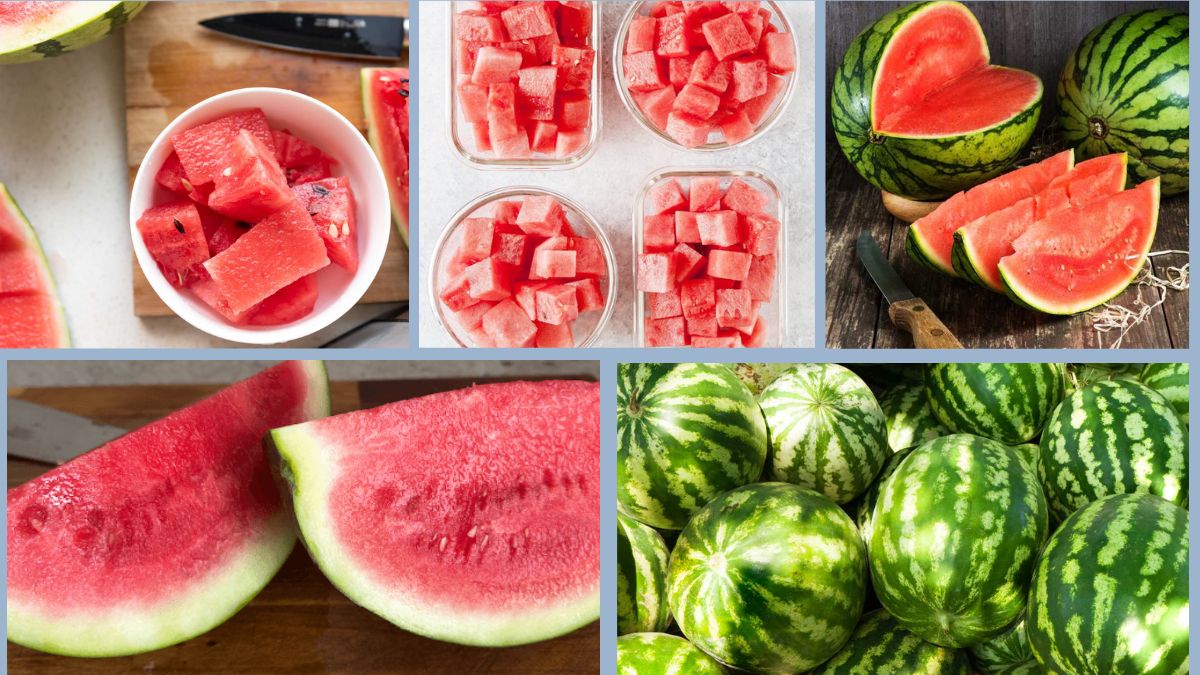
Watermelon is the ultimate summer fruit — vibrant, hydrating, and naturally sweet. Whether you’re slicing it up for a picnic, blending it into smoothies, or enjoying it as a refreshing snack, nothing beats a perfectly ripe watermelon. But with its high water content and soft texture, storing watermelon properly — both whole and cut — is key to maintaining its freshness, flavor, and safety.
In this article, we’ll guide you through the best practices for storing whole and cut watermelon, maximizing its shelf life using only vegetarian, natural methods (absolutely no non-veg or artificial preservatives).
Why Proper Storage Matters
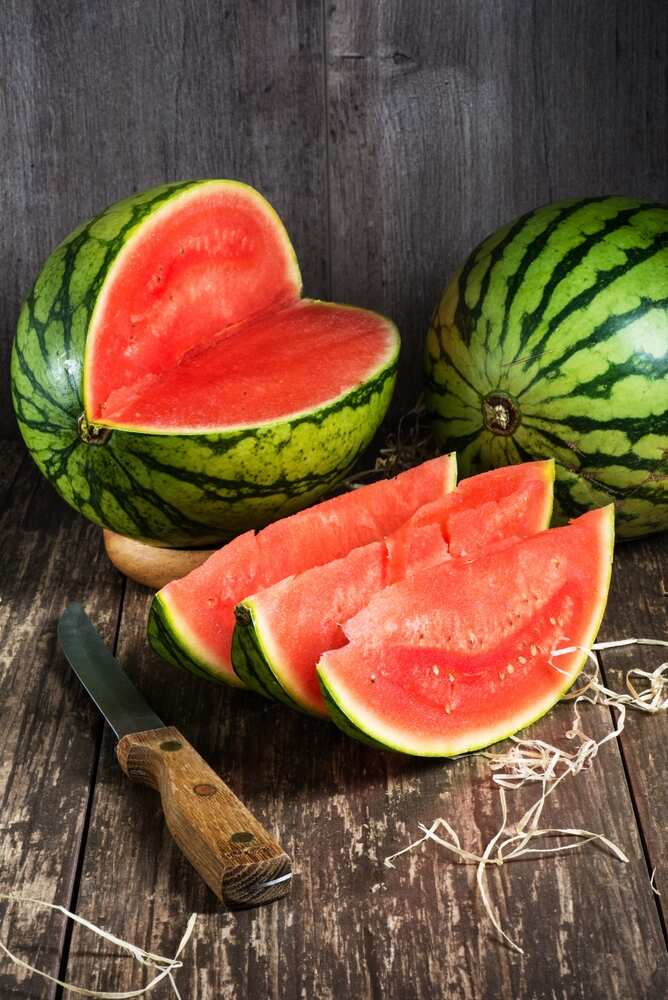
Watermelon is made up of more than 90% water, making it incredibly refreshing — and also highly perishable. Once cut, watermelon is prone to:
- Rapid bacterial growth
- Texture breakdown
- Moisture loss
- Absorbing other odors from the fridge
Even a whole watermelon can become mealy, bland, or moldy if not stored correctly. Fortunately, a few simple steps can help you preserve the quality and flavor of your watermelon for days or even weeks.
Step 1: How to Choose a Watermelon for Better Storage
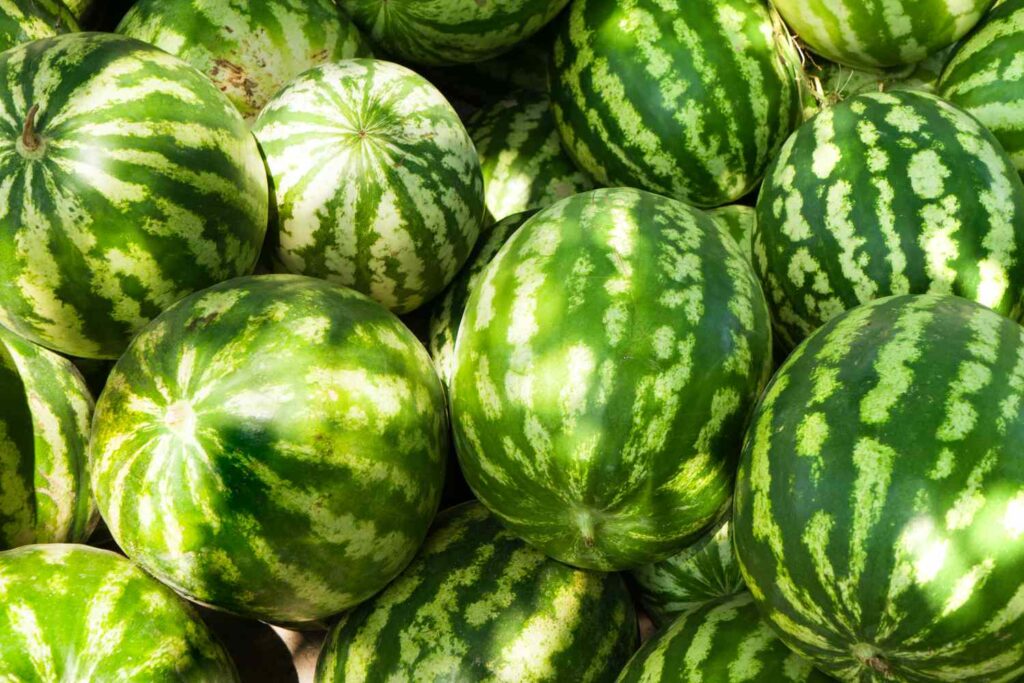
Great storage starts with picking the right fruit. Whether you buy from a farmer’s market or grocery store, look for these signs:
Signs of a Good, Ripe Watermelon:
- Field spot: A creamy yellow spot (where it rested on the ground) indicates ripeness.
- Uniform shape: Round or oval, with no dents or flat sides.
- Heavy for its size: More water = more juiciness.
- Deep, hollow sound: Tap it — ripe melons sound hollow.
- Dull skin: Shiny skin often means underripe.
Tip: Avoid melons with soft spots, mold, or cracks.

Step 2: How to Store a Whole Watermelon
At Room Temperature (If Uncut and Unripe)
Whole watermelons can be stored on the counter or in a cool, dark pantry.
- Best for: Uncut melons that still need a little ripening.
- Duration: 7–10 days at room temperature.
- Condition: Keep it away from direct sunlight and off cold floors.
According to USDA research, storing watermelon at room temperature (around 20°C/68°F) can preserve more antioxidants (like lycopene and beta-carotene) than refrigerating early.
In the Refrigerator (If Fully Ripe)
Once ripe, you can refrigerate a whole watermelon to slow down further ripening and prevent spoilage.
- Wrap in a clean cloth or reuse produce bag (optional but helps reduce moisture loss).
- Store on a shelf, not in the crisper (melons are too big and prone to bruising in cramped spaces).
- Duration: 2–3 weeks when stored whole and cold.
Cold storage maintains firmness and sweetness. However, refrigerate only when fully ripe to avoid bland texture.
Step 3: How to Store Cut Watermelon
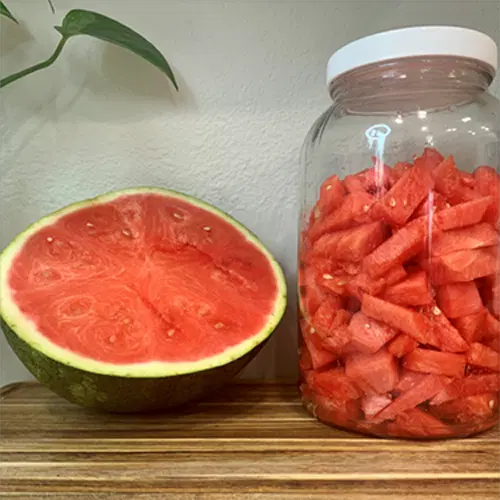
Once cut, watermelon becomes highly perishable and vulnerable to bacteria and moisture loss. You must seal and chill it properly to maintain safety and taste.
Storing Large Cut Pieces (Like Halves or Quarters)
- Wrap the exposed flesh tightly in compostable plastic wrap, reusable beeswax wrap, or a silicone food cover.
- Store cut-side up to prevent juices from pooling.
- Keep in the fridge at 4°C (40°F) or below.
Shelf life: 3–4 days

Optional: Place a paper towel under the melon to absorb excess moisture and prevent sogginess.
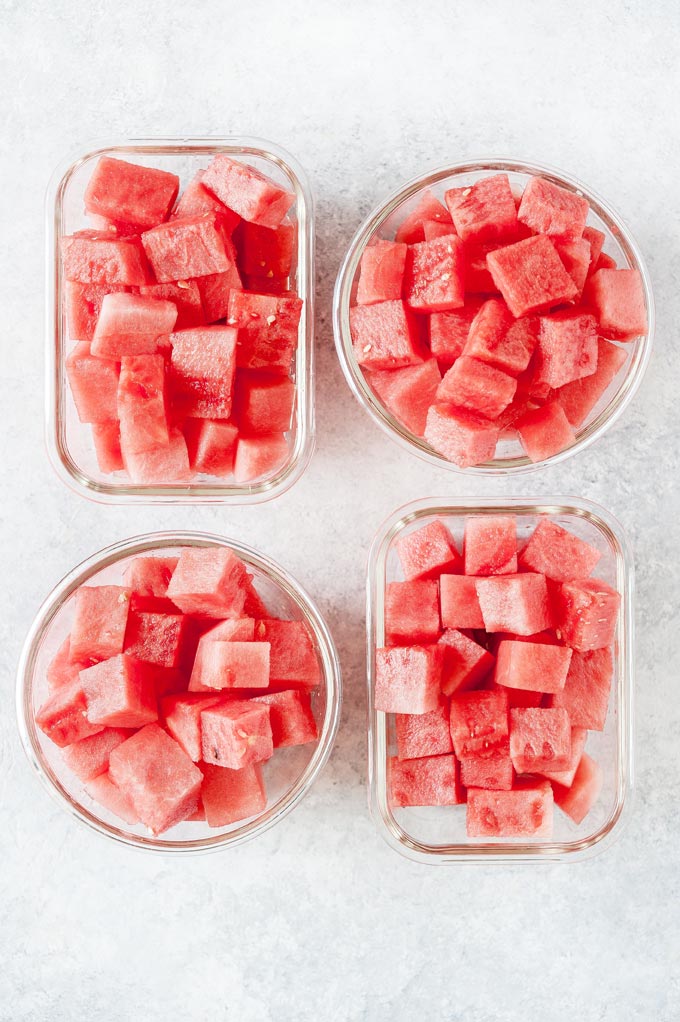
Storing Cubes or Slices
- Cut into bite-size cubes or slices.
- Transfer to an airtight container (preferably glass or BPA-free plastic).
- Add a layer of lemon or lime juice if you want to brighten flavor and reduce oxidation.
Shelf life: 3–5 days
Citrus juice not only enhances taste but also acts as a natural preservative.
Step 4: Can You Freeze Watermelon?
Yes, though the texture will change — frozen watermelon becomes soft and grainy when thawed. But it’s perfect for smoothies, frozen desserts, or infused water.
How to Freeze Watermelon (Naturally)
- Cut into cubes and remove seeds.
- Spread on a parchment-lined tray and freeze for 3–4 hours.
- Transfer to freezer-safe bags or containers.
- Label and date.
Freezer Life: Up to 10 months
Best Uses for Frozen Watermelon:
- Smoothies
- Fruit slushies
- Sorbet
- Vegan popsicles
- Watermelon lemonade
Do not freeze whole or uncut watermelon — the water expands and destroys the internal structure.

Common Mistakes to Avoid
1. Leaving Cut Watermelon Out Too Long
Cut watermelon should never sit out for more than 2 hours at room temperature (or 1 hour if above 32°C/90°F). Bacteria grow quickly in moist environments.
2. Storing Near Ethylene-Producing Fruits
Bananas, apples, and avocados release ethylene gas, which can cause watermelon to deteriorate faster. Store separately.
3. Washing Before Storage
Whole watermelons should only be washed right before cutting, not before storing. Moisture on the rind encourages mold.
4. Storing in Loose Plastic Bags
Avoid loosely wrapped plastic — it traps moisture and creates a breeding ground for mold. Use airtight containers or well-fitted wraps.
Vegetarian-Friendly Uses for Watermelon
If your watermelon is getting soft or overripe, don’t toss it! Get creative with these veg-friendly ideas:
Watermelon Smoothie
Blend cubed watermelon with mint, lime juice, and plant-based yogurt.

Watermelon Salad
Toss with cucumber, cherry tomatoes, fresh basil, and vegan feta.
Watermelon Granita
Freeze blended watermelon with lime juice and scrape into flakes.
Infused Water
Add watermelon chunks to cold water with lemon or cucumber slices.
Vegan Watermelon Sorbet
Blend frozen cubes with a splash of agave or coconut water.
All these ideas are plant-based, nutritious, and naturally refreshing!
Watermelon Storage Summary Table
| Watermelon State | Storage Method | Shelf Life | Notes |
|---|---|---|---|
| Whole (unripe) | Room temp, away from sunlight | 7–10 days | Flip occasionally for even ripening |
| Whole (ripe) | Refrigerator (unwrapped) | 2–3 weeks | Store on shelf, not crisper drawer |
| Cut (halves) | Wrapped in fridge | 3–4 days | Keep cut-side up, use tight wrap |
| Cut (cubes) | Airtight container in fridge | 3–5 days | Optional citrus for extra freshness |
| Frozen (cubes) | Freezer-safe bag/container | Up to 10 months | Best for smoothies, slushies, sorbets |
Pro Tips for Maximum Watermelon Enjoyment
- Eat at room temperature for the best flavor.
- Use a melon baller to make bite-sized portions for kids or party trays.
- Keep a paper towel in storage containers to soak up extra moisture.
- Add fresh herbs like mint or basil to elevate the flavor of stored melon dishes.
Final Thoughts: Preserve the Sweetness, Naturally
With the right storage techniques, watermelon doesn’t have to be a fleeting pleasure. Whether it’s whole or sliced, chilled or frozen, this delicious fruit can remain juicy, safe, and satisfying longer than you might think — all without chemical preservatives or animal-based methods.

So the next time you bring home a big, beautiful watermelon, follow this natural, vegetarian-friendly guide to enjoy every slice — sweet, crisp, and perfectly stored.