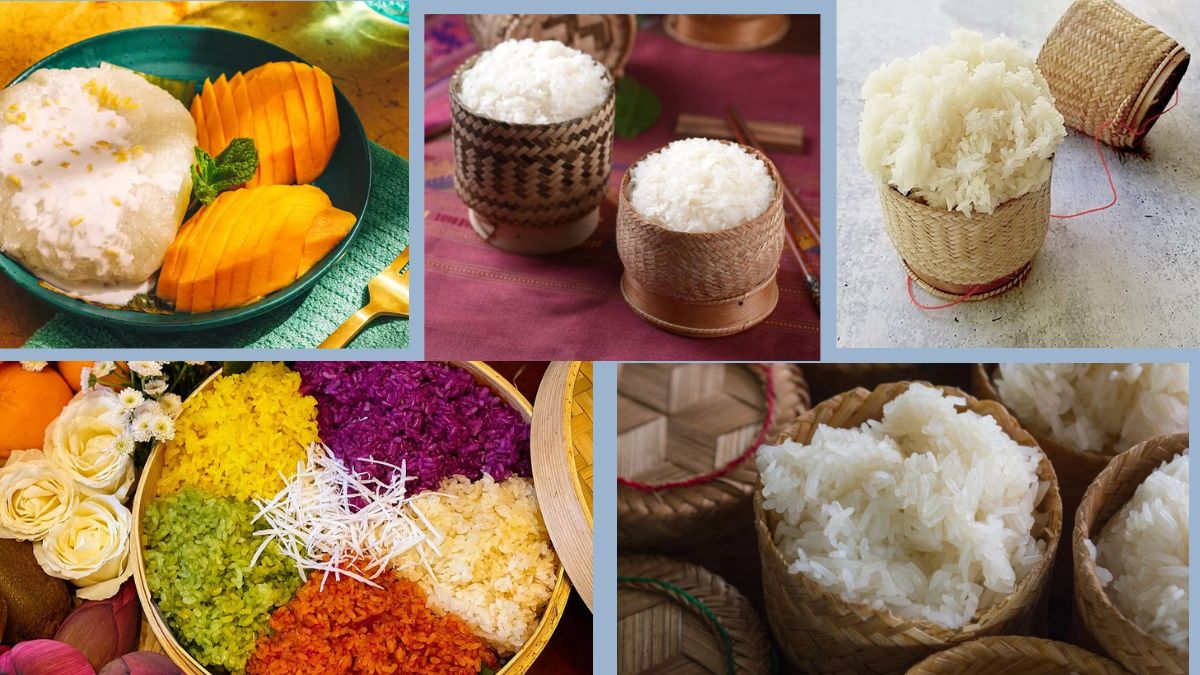
Sticky rice—also known as glutinous rice—is a staple across Asia. Its chewy, comforting texture makes it a favorite in both sweet and savory dishes. But which country eats the most sticky rice in the world?
The answer is Laos.
Often overshadowed by its larger neighbors, Laos consumes more sticky rice per capita than any other country in the world. It’s not just a food item here—it’s a symbol of national identity, tradition, and daily life. In this article, we explore why sticky rice holds such significance in Laos, its cultural impact, and the various delicious vegetarian dishes that highlight this humble grain.
What is Sticky Rice?
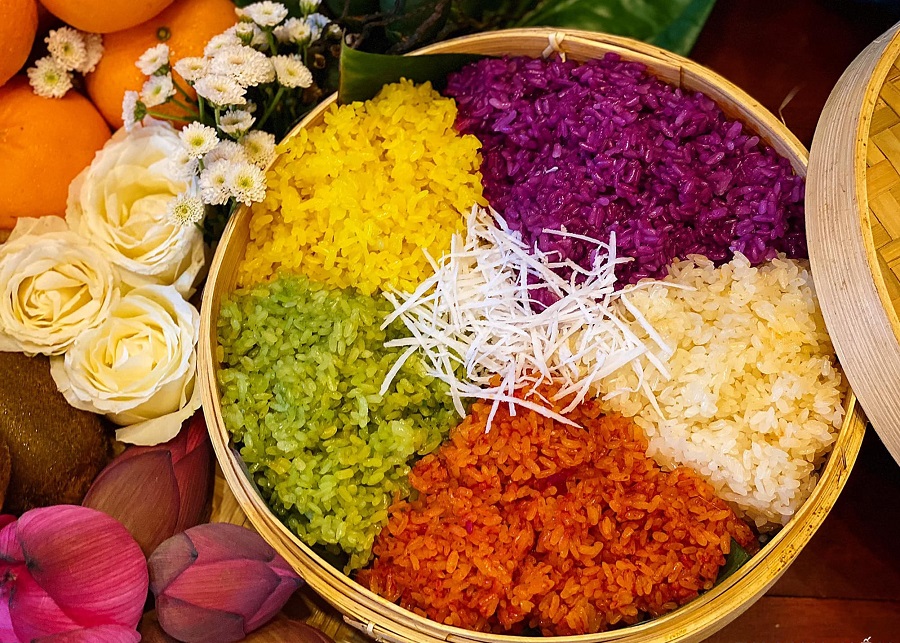
Sticky rice, or khao niao in Lao, is a type of short-grain glutinous rice that becomes especially sticky when cooked due to its high amylopectin content and low amylose. Despite the term “glutinous,” it contains no gluten.
Unlike the fluffy, separate grains of jasmine or basmati rice, sticky rice clumps together. This allows it to be eaten by hand and used in creative, flavorful dishes.
Why Laos is the Sticky Rice Capital of the World
Laos is often referred to as the “Land of Sticky Rice”. It is the only country in the world where sticky rice is the dominant staple food.
Key Reasons:
- Daily consumption: Sticky rice is eaten with nearly every meal in Laos—breakfast, lunch, dinner, and even dessert.
- Cultural roots: Sticky rice plays a major role in spiritual offerings, festivals, and family gatherings.
- Farming traditions: Laotians have cultivated sticky rice for centuries, using heirloom varieties suited to the mountainous terrain.
- Per capita consumption: The average Laotian eats more than 150 kg of sticky rice annually, one of the highest rice intakes globally.
Sticky rice isn’t just food in Laos—it’s a way of life.
Sticky Rice Around the World
Although Laos leads the world in sticky rice consumption, it’s popular in many Asian countries:
| Country | Sticky Rice Usage |
|---|---|
| Thailand | Northern Thai cuisine, desserts like mango sticky rice |
| Vietnam | Sticky rice (xôi) with beans, peanuts, and coconut |
| China | Used in dim sum, zongzi (rice dumplings), sweet balls |
| Cambodia | Traditional sweets like num ansom |
| Myanmar | Sticky rice snacks and breakfast items |
| Japan | Glutinous rice flour used in mochi and rice cakes |
| Korea | Sweet rice in ceremonial dishes and rice cakes |
Still, in all of these countries, sticky rice is a specialty. In Laos, it’s the main staple, consumed more than any other food.
How Sticky Rice is Traditionally Cooked
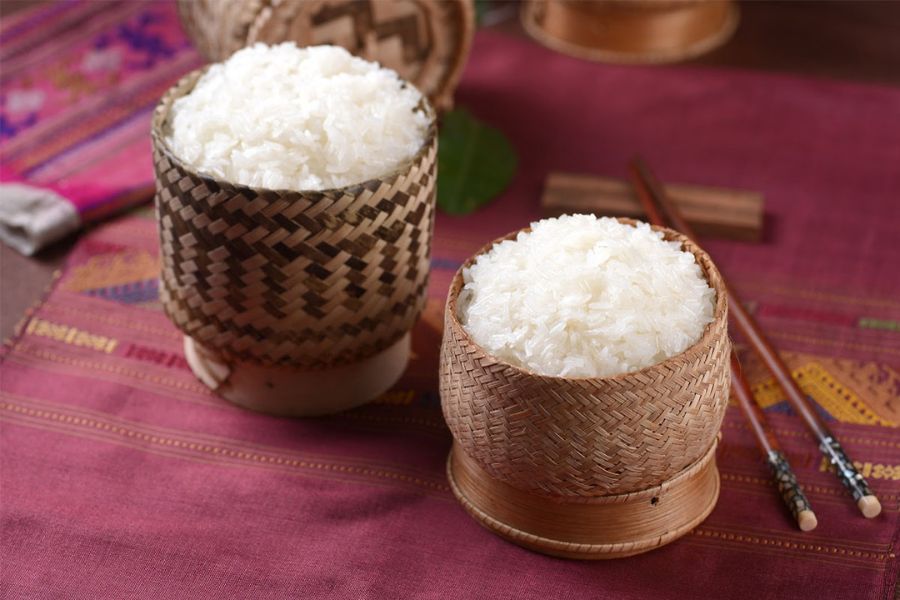
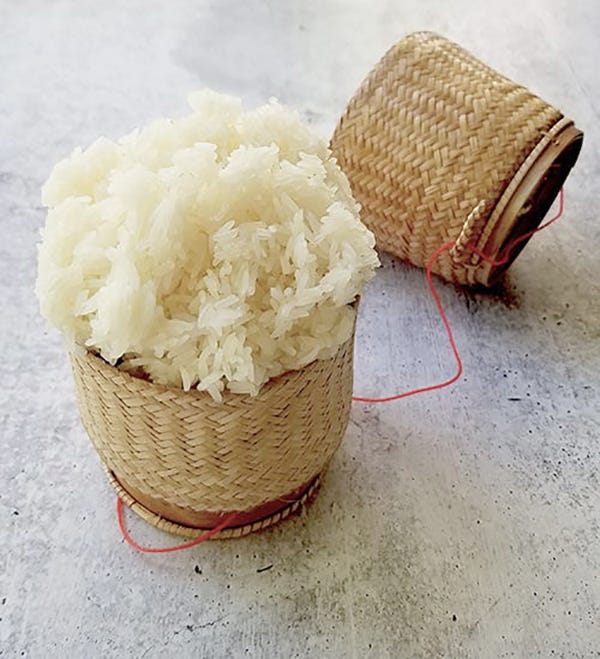
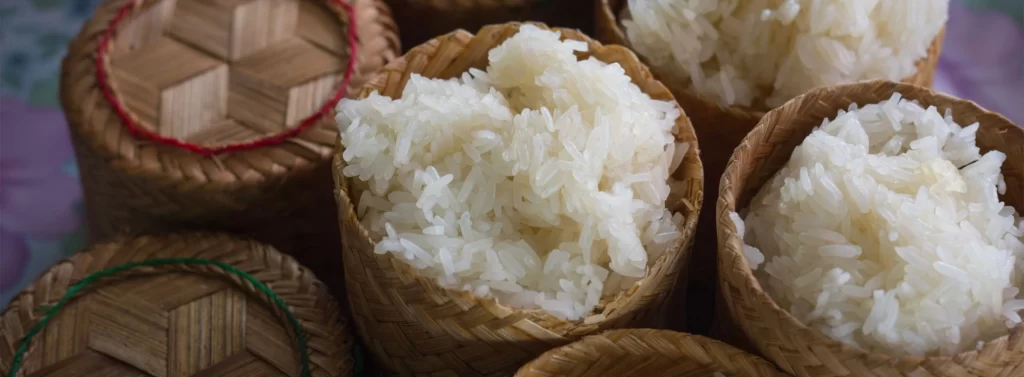
Sticky rice is not boiled like regular rice. Instead, it’s soaked and steamed in a traditional bamboo basket called a huad and served in a woven container called a thip khao.
Steps:
- Soak the rice for 4–8 hours or overnight.
- Drain and place in a bamboo steamer.
- Steam over boiling water for 20–30 minutes.
- Flip and steam again to ensure even cooking.
The result is a fragrant, chewy rice that you can ball up and dip into sauces or curries. Best of all, it’s naturally gluten-free, vegetarian, and filling.
Vegetarian Sticky Rice Dishes
Sticky rice is incredibly versatile, and in Laos (and beyond), there are countless meat-free dishes that celebrate its texture and flavor.
1. Sticky Rice with Jeow (Dipping Sauces)
A simple but flavorful meal where sticky rice is paired with vegetarian dipping sauces made from ingredients like tomatoes, roasted chili, or tamarind.
Popular vegetarian jeows:
- Jeow mak len – spicy tomato dip
- Jeow mak keua – roasted eggplant dip
- Jeow bong (without fish) – chili and tamarind sauce
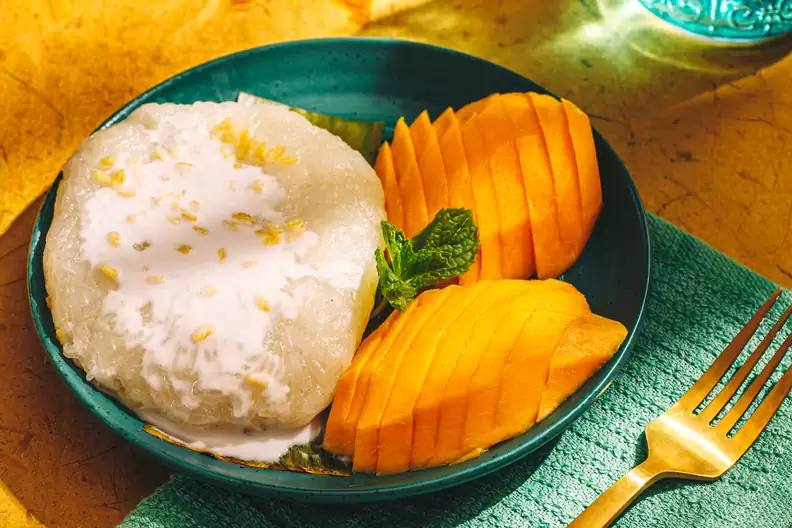
2. Mango Sticky Rice (Thailand and Laos)
A well-loved dessert made with sticky rice, sweet coconut milk, and fresh ripe mangoes. It’s creamy, tropical, and totally vegetarian.
3. Xôi (Vietnamese Sticky Rice)
In Vietnam, sticky rice is prepared in a variety of colorful, plant-based styles:
- Xôi lá cẩm – dyed purple with butterfly pea flower
- Xôi gấc – bright red sticky rice with gấc fruit
- Xôi đậu xanh – sticky rice with mung beans and coconut
4. Sticky Rice with Coconut and Sesame
A common Laotian dessert served with shredded coconut and toasted sesame seeds, sometimes sweetened with palm sugar.
5. Sticky Rice Spring Rolls
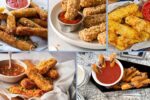
Soft or fried rolls filled with sticky rice, mushrooms, cabbage, and carrots—perfect for vegetarians looking for fusion-style snacks.
Nutritional Value of Sticky Rice (Per 1 cup cooked)
| Nutrient | Amount |
|---|---|
| Calories | 169 kcal |
| Carbs | 37 g |
| Protein | 3 g |
| Fat | 0.3 g |
| Fiber | 1.7 g |
| Gluten | 0 g (gluten-free) |
| Glycemic Index | High (if eaten alone) |
While sticky rice is high in carbohydrates, it becomes a balanced meal when paired with vegetables, legumes, or fruits.
Sticky Rice in Festivals and Religion
In Laos and northern Thailand, sticky rice is not just food—it’s part of religious and social life.

- Buddhist Offerings: Locals offer sticky rice to monks during daily almsgiving ceremonies.
- Festivals: Dishes like sticky rice cakes or balls are used in Lao New Year (Pi Mai) celebrations.
- Spiritual Symbolism: It represents unity and generosity, often shared from the same container among family or community.
Sticky Rice and Identity
Sticky rice in Laos is deeply tied to national pride. In fact, Laotians sometimes refer to themselves as “luk khao niao,” which translates to “children of sticky rice.”
In a globalized world, where diets are increasingly westernized, sticky rice remains a firm cultural anchor for the Lao people. Its preparation and sharing rituals reinforce family ties, regional identity, and community belonging.
Sticky Rice in Global Cuisine
Sticky rice is no longer limited to Southeast Asia. Due to rising interest in plant-based, gluten-free, and traditional foods, it’s now popular in:
- Health-conscious restaurants
- Vegan and vegetarian cafes
- Food trucks and street food festivals
- Cookbooks and YouTube recipe videos
It’s even entering Western dessert menus, paired with berries, coconut cream, or maple syrup.
Final Thoughts
So, which country eats the most sticky rice in the world?
Without a doubt, Laos.
Laos doesn’t just consume the most sticky rice—it celebrates it. It elevates it into an art form, a tradition, a memory. And best of all, it offers a stunning array of vegetarian dishes that are as nourishing as they are delicious.
Whether you enjoy it steamed with a tangy dip, layered in sweet mango desserts, or tucked inside savory rolls, sticky rice proves that simple ingredients can tell the richest stories.